Practical guide
How to Cancel a Gym Membership in Canada: Letter and Deadlines in Quebec and Ontario
Cancelling a gym membership in Quebec or Ontario: deadlines, fees, what the letter should say, and how to have Capycom mail it.
 Capycom
The five dollar fee, the thirty day legal deadline and what a letter needs to include to get federal records.
In 1983, the Access to Information Act came into force in Canada. It gives any person or corporation present in Canada, and any Canadian citizen or permanent resident wherever they live, the right to request records held by a federal institution. The Privacy Act, passed the same year, adds the right to see one's own personal information held by those institutions, and to ask for a correction if needed. Each federal department and agency handles its own requests through its own Access to Information and Privacy office, usually called an ATIP office.
There are two ways to file a request. The Treasury Board of Canada Secretariat's online service, at atip-aiprp.tbs-sct.gc.ca, lets a requester fill out the form, pay by card and track the file afterward. Without access to that service, a request can also go by mail, using the official form (TBS/SCT 350-57 for access to information, 350-58 for personal information) or a plain signed and dated letter. In that case, the letter needs to state that it is made under the relevant Act, then describe the information sought with enough detail for the ATIP office to find it. The request goes straight to the office of the federal institution that actually holds the records, since there is no single mailing address shared across the whole government.
A clear request letter states:
Precision matters more than length here. A request built around clear keywords and a defined time period moves faster than one written in vague terms.
An access to information request costs five dollars, which covers the first five hours of search time. Each additional hour costs ten dollars, and photocopies cost twenty cents a page past the first hundred and twenty five. A personal information request is free. When paying by mail, the payment takes the form of a cheque or money order made out to the Receiver General for Canada.
The institution has thirty days to respond, counted from the day it receives the request. It can extend that deadline, mainly when the request covers a large volume of records or requires consulting a third party, but it then has to notify the requester within the first thirty days and give the reason. Someone unhappy with the outcome can complain to the Information Commissioner of Canada for an access to information matter, or to the Privacy Commissioner of Canada for a personal information one.
Worth knowing: the thirty day legal clock starts when the institution receives the letter, not when it gets mailed. Sending it early in the week avoids losing processing days for nothing.
Sending a letter like this stays simple with Capycom: write the text online, and Capycom prints and mails the standard letter anywhere in Canada, no printer and no trip to the post office required.
Sources:
Department of Finance Canada, steps for filing an ATIP request
Canadian Food Inspection Agency, how to make an access to information request
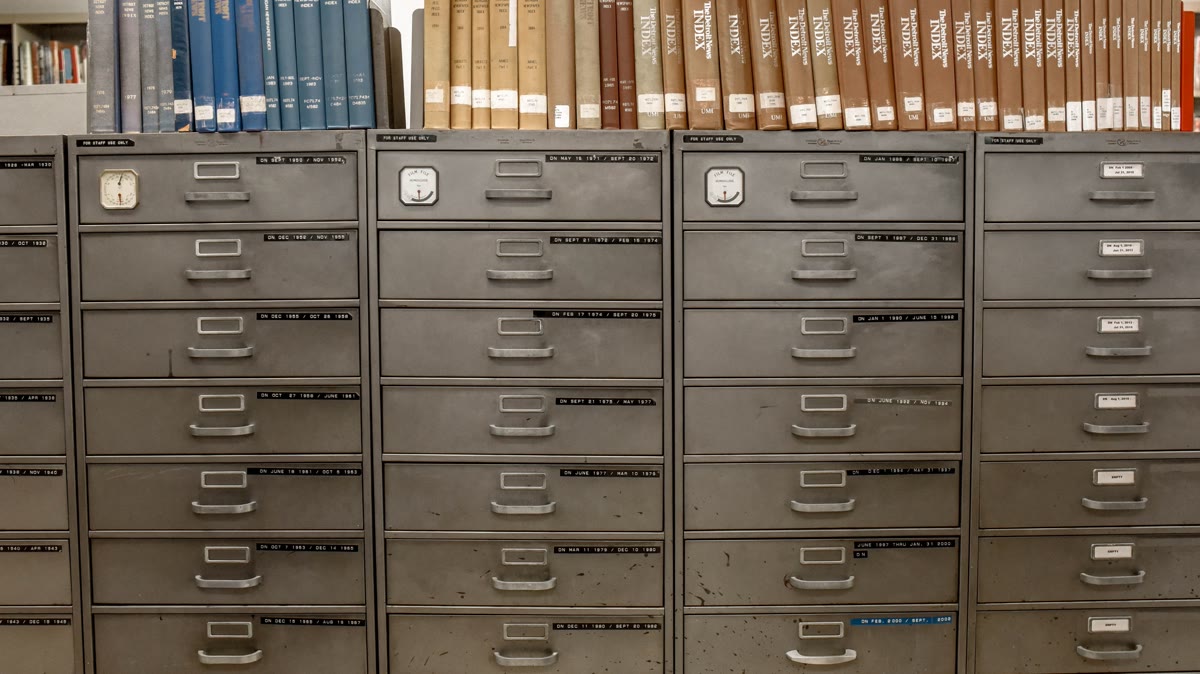
Image: library filing cabinets, photo by Element5 Digital, free Pexels license.
Practical guide
Cancelling a gym membership in Quebec or Ontario: deadlines, fees, what the letter should say, and how to have Capycom mail it.

Practical guide
Refund request letter for Canada: evidence to gather, what to write and where to turn if the store refuses. Mail it with Capycom, no stamps needed.
Practical guide
What goes in a demand letter, what deadline to give and how to mail it in Canada. A free template on Capycom, filled in with three questions.