News
Love Letters Are Back, Saying What Words Alone Don't Dare
A British survey confirms it: the love letter is trending again. Here's why, and how to send one anywhere in Canada with Capycom.
 Capycom
In 1898, Canada Post issued a world map stamp to announce a new imperial postage rate, and ended up creating the Christmas stamp along the way.
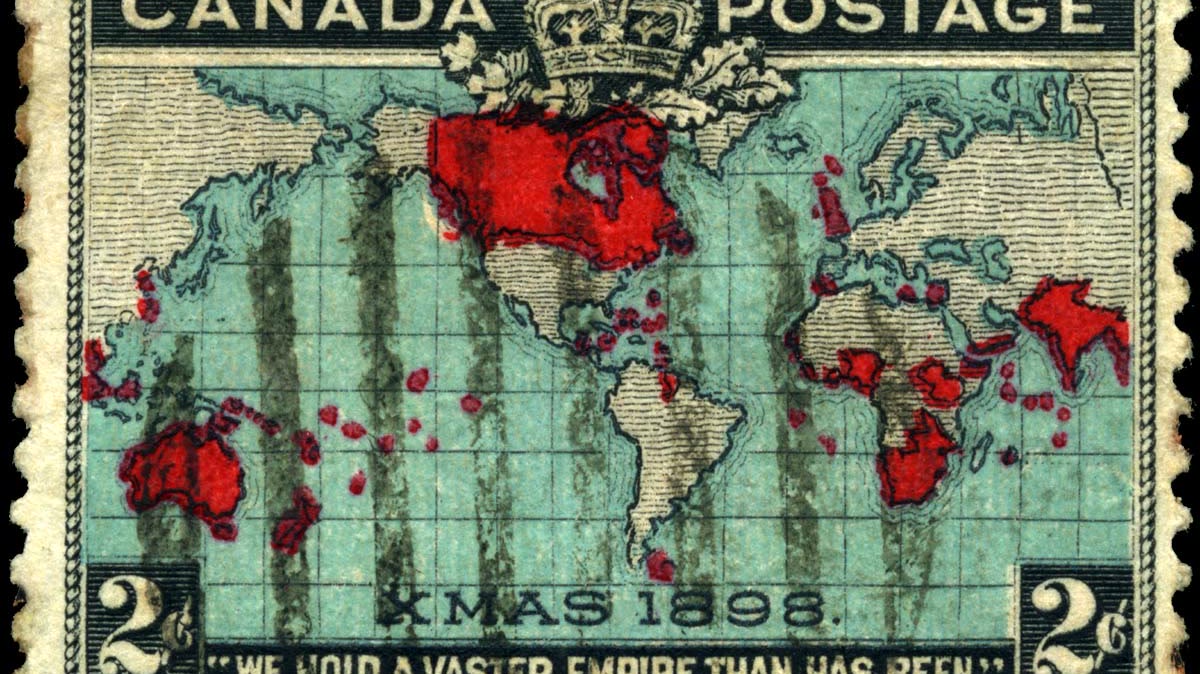
On December 7, 1898, Canada Post put on sale a stamp unlike anything that came before it. William Mulock, the country's Postmaster General, first wanted to launch it on November 9, the Prince of Wales's birthday. Queen Victoria, who had kept a cold relationship with her eldest son since Prince Albert's death in 1861, is said to have answered flatly, "what prince?" Mulock changed course and offered a stamp for Christmas instead, "the prince of peace." The redesigned project went ahead in a hurry and reached post offices a month later, timed to a new postal rate taking effect on Christmas Day itself.
Unlike other stamps of the period, this one carries no portrait and no coat of arms. Warren L. Green, who worked for the American Bank Note Company in Ottawa, drew a Mercator projection of the world, later engraved by Charles Skinner. A memorandum in Green's own hand, dated October 1898, describes the rushed work he did alongside Mulock on the design. It records an early sketch with a line still quoted by collectors today, "This is a rough idea for the new stamp." On the finished map, the territories of the British Empire appear in red, with Canada placed at the center. Along the bottom, the words "XMAS 1898" sit above a line borrowed from a poem written for Queen Victoria's jubilee, "We hold a vaster Empire than has been."
The stamp's first job was to announce a rate change. Starting December 25, 1898, mail sent from Canada to any other territory that adopted the same system cost two cents instead of three. The plan, known as Imperial Penny Postage, had been agreed earlier that year at a conference in London attended by Britain, Canada, Newfoundland, the Cape Colony and Natal. The stamp was never meant to sit in a drawer as a mere souvenir. Mulock wanted it used for ordinary mail too, both abroad and at home, exactly like any other stamp in circulation that year.
Even though Christmas 1898 marks a precise moment in Canadian postal history, the idea of a stamp tied to the holiday spread slowly elsewhere. The next known stamp to mention Christmas did not appear until 1935, in Britain, as an overprint on 1934 stamps meant for British troops stationed abroad. Canada itself waited until 1964 before taking up the idea again for good.
Worth knowing: a stamp issued for a specific occasion, like this one for Christmas 1898, stays valid for postage long after the date has passed. Nothing requires using it on the day itself.
More than a century later, writing a letter for Christmas remains a simple thing to do. Capycom handles the printing and mailing of a standard letter anywhere in Canada, with no printer and no trip to a post office required.
Image credit: "Stamp Canada 1898 2c Xmas blue", scanned by Stan Shebs, public domain, Wikimedia Commons.

News
A British survey confirms it: the love letter is trending again. Here's why, and how to send one anywhere in Canada with Capycom.

News
Pinterest says handwritten letters are making a big comeback in 2026. Why receiving one feels so good, and how to send one to the people you love without leaving home, with Capycom.

News
Cornwall, Regina, Saskatoon and Prince Rupert join the 2027 community mailbox conversion schedule, as Sept-Iles and Winnipeg make the switch starting in October 2026.