News
Love Letters Are Back, Saying What Words Alone Don't Dare
A British survey confirms it: the love letter is trending again. Here's why, and how to send one anywhere in Canada with Capycom.
 Capycom
In 1839, a Halifax shipowner won the British mail contract and turned a crossing of thirty to seventy days into an appointment with a fixed date.
Before steam, a letter leaving London for Halifax or Boston travelled on the Falmouth packets, the Admiralty's sailing ships. The crossing took thirty to seventy days depending on the winds. A merchant writing to his correspondent in Liverpool had no idea when his letter would land, or when the reply would come back. People planned around that uncertainty the way they planned around weather.
On 7 November 1838, the British Admiralty called for tenders to carry the mail by steam between England and New York, calling at Halifax. Two British bids came in. Neither satisfied the department.
Samuel Cunard was born in Halifax on 21 November 1787. He had already taken part in the venture of the Royal William, the ship that crossed the Atlantic mainly under steam in 1833. By the time he heard about the tender, the closing date had passed.
He sailed for England anyway, carrying a letter from Lieutenant-Governor Sir Colin Campbell. His conviction fitted in one sentence: steamships could arrive with the punctuality of a railway. At the Admiralty, the comptroller was William Edward Parry, the Arctic explorer, who had known Cunard in Halifax during the War of 1812. The door opened.
That day, Cunard put a costed offer on the table:
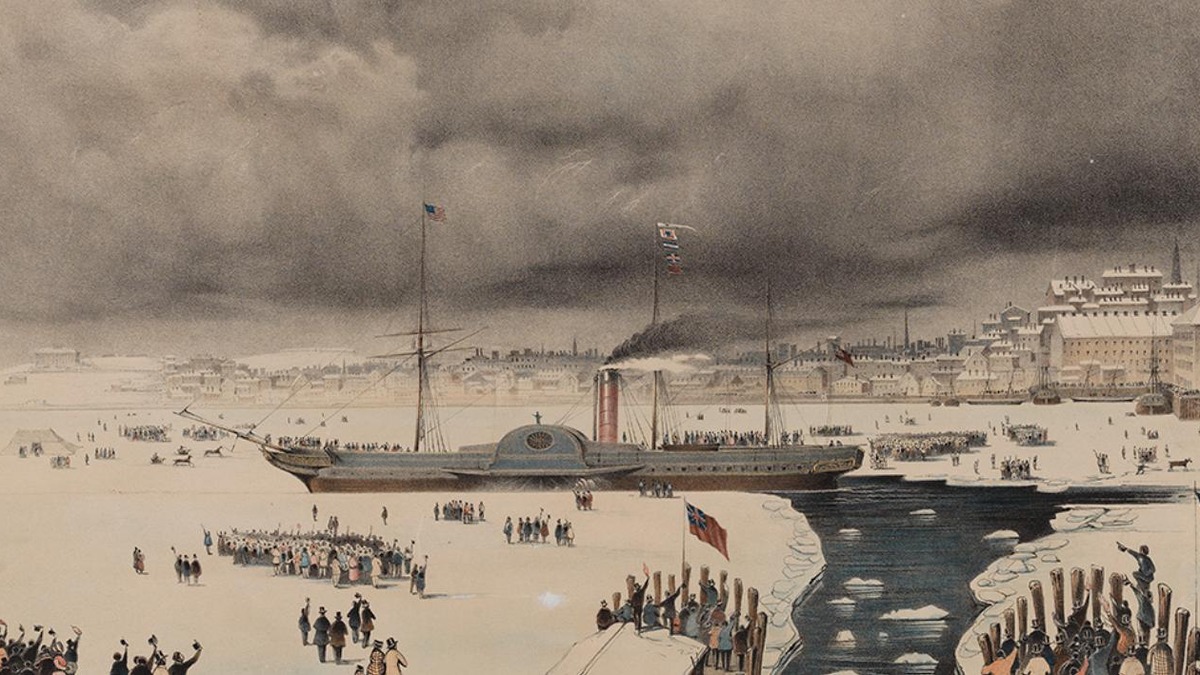
The Admiralty accepted. Cunard founded the British and North American Royal Mail Steam Packet Company, ancestor of the Cunard Line. The first sailing took place in May 1840. That July, the paddle steamer Britannia opened the regular service: Liverpool, Halifax, then Boston in 14 days and 8 hours.
Worth knowing: in Halifax, the announcement alone was enough for residents to subscribe 8,000 pounds to build a hotel for the passengers they expected.
The gain was not only speed. It was the calendar. From 1840 on, you knew the day the mail left and, give or take, the day it arrived. A merchant could finally line up an order against an expected reply.
The line kept changing. Iron hulls after 1855, screw propellers by the early 1860s. Halifax stopped being a regular port of call in 1867. Cunard was made a baronet in 1859 for the service his ships gave during the Crimean War, and died in London on 28 April 1865.
What Cunard sold the Admiralty was not a vessel, it was a date. A paper letter keeps that quality: it leaves at a known moment and it leaves something physical in the recipient's hands.
Capycom handles the tedious part. You write your letter online, we print it, fold it into an envelope and drop it off with Canada Post as a standard letter.
Sources: Dictionary of Canadian Biography, CUNARD, Sir SAMUEL and The Canadian Encyclopedia, Sir Samuel Cunard.
Illustration: 1844 lithograph, the Britannia leaving East Boston through a channel cut in the ice. J. C. King, A. de Vaudricourt, Bouve and Sharp, Royal Museums Greenwich, public domain, via Wikimedia Commons.

News
A British survey confirms it: the love letter is trending again. Here's why, and how to send one anywhere in Canada with Capycom.

News
Pinterest says handwritten letters are making a big comeback in 2026. Why receiving one feels so good, and how to send one to the people you love without leaving home, with Capycom.
News
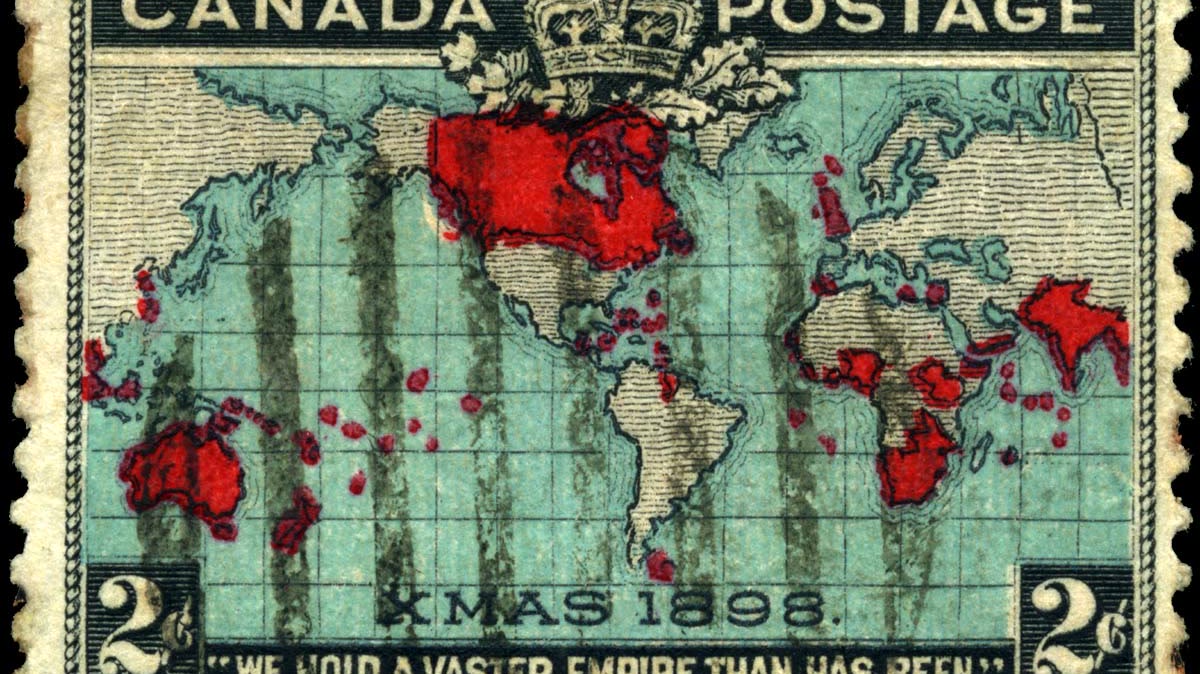
In 1898, Canada Post issued a world map stamp to announce a new imperial postage rate, and ended up creating the Christmas stamp along the way.